VANA — The Asset Behind an Open Data Economy
How fees are charged and allocated, staking is rewarded, and fee income funds buybacks and burns.
1. Overview
Vana is open data infrastructure for human-grounded AI. Compute was the last scarce resource; human-grounded data is the next.
Data cannot move on rails that a counterparty owns. A person will not route their data through infrastructure controlled by the party that wants to use it, and a developer will not build on rails whose operator may become their competitor. The protocol records permission, enforces terms, and lets no participant change the rules on its own.
VANA is the economic instrument of that substrate.
Two sides of the market
Data contributed to the network works on the contributor's behalf across every application they authorise, under permissions they set and can revoke. Builders come for permissioned data with a record of provenance, which is hard to get elsewhere.
Each side makes the other more useful. Every dataset added widens what any builder can reach; every builder added gives contributors somewhere to use their data. The reach is the product of the two populations rather than their sum: one dataset serves a thousand applications at the same cost of contribution, and one application reaches a million datasets through the same permission.
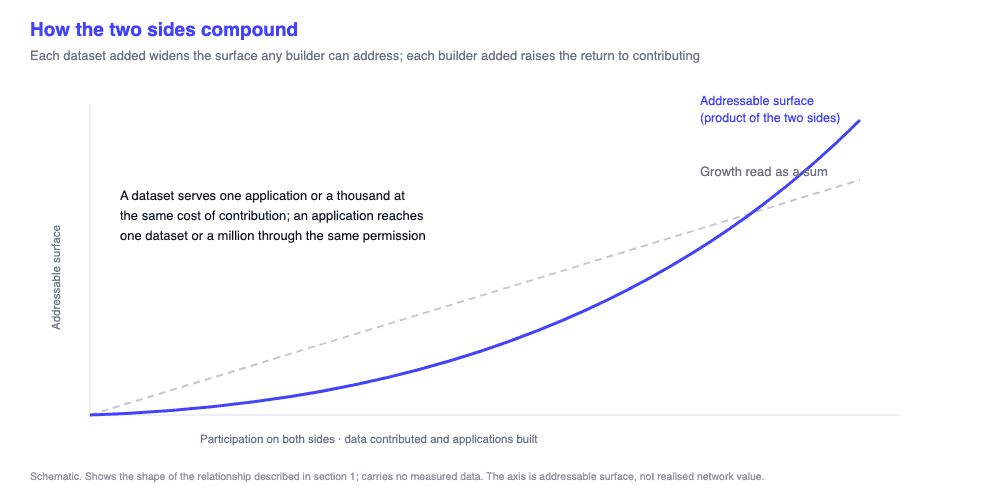
Figure 1. Addressable surface between the two populations, plotted as the product of their sizes. The axis is addressable surface, not realised network value.
What the protocol charges for
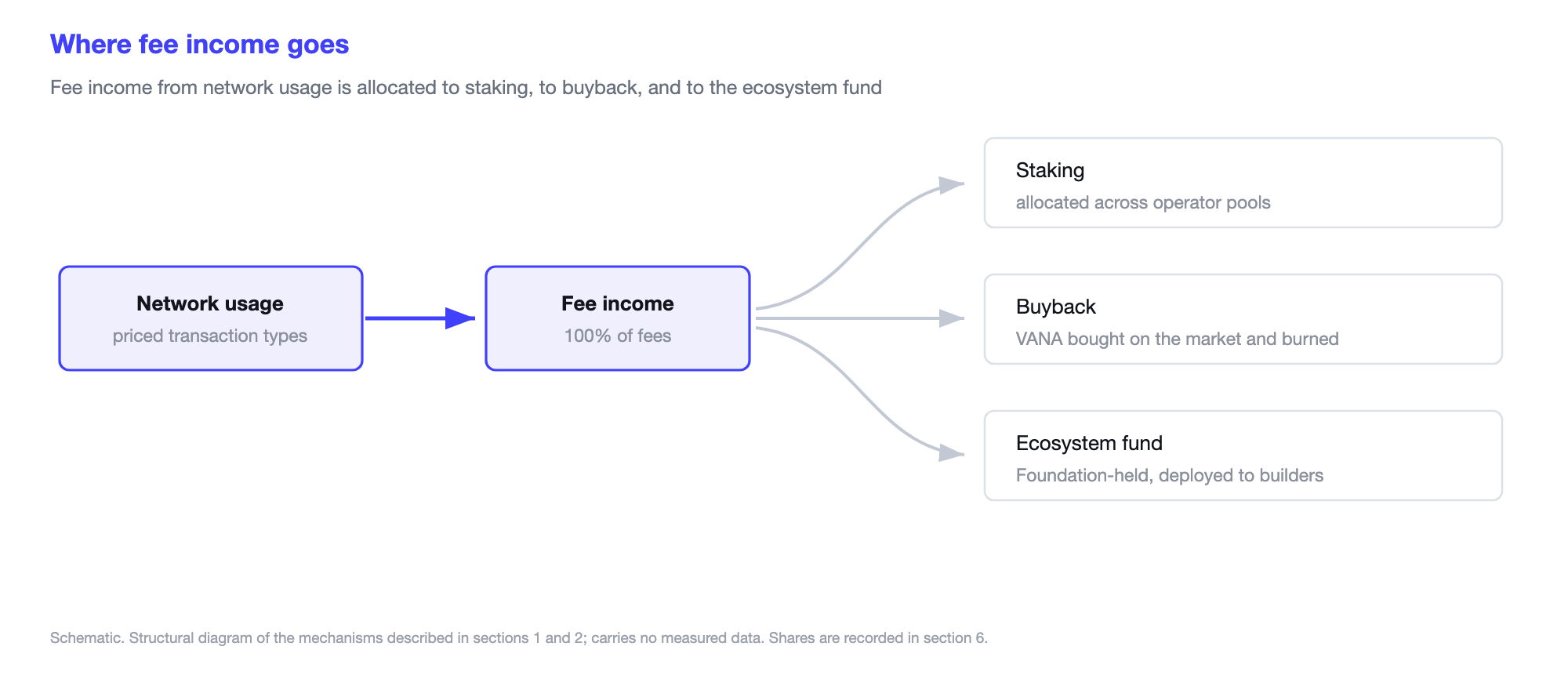
Figure 2. Fee income from network usage is allocated to staking, to buyback, and to the ecosystem fund.
The protocol prices transaction types across the data lifecycle. Each transaction type carries its own rate, set independently of the others, and transaction types can be added over time.
Some transaction types happen once. Data comes into the network, a personal server is registered, a grant is issued — each happens once per user or per piece of data.
Others repeat against what those created. Once data is in the network and a grant exists, it can be read and paid for an unlimited number of times.
That is where the fee base grows. Repeat transaction types scale with how much the data is used, not with how many users join.
Where the fees go
To the parties securing the network. The larger share is allocated across operator pools in proportion to the VANA staked with them. Operators run the network and take a commission on what their pool earns. A bonding period applies before staked VANA earns, and what it earns depends on the operator chosen and the commission that operator sets.
To the token. A further share is used to buy VANA on the market, and what is bought is burned.
To the ecosystem. The Foundation holds the remainder and deploys it as grants and support for builders, expanding the number of applications using the network.
2. Fees and where they go
2.1 Transaction types
| Transaction type | What it is | How often |
|---|---|---|
| Data write | Data brought into the network | Each time a user writes data to the network, including updating an already connected data source |
| Personal server registration | The user's own data environment | Once per user |
| Permission grant | Consent recorded on-chain for a defined scope | Once per application, per data source |
| Read against a granted scope | An application reading data it holds a permission for | Every time the application uses the data |
The first three happen once or as new data is added. Reads repeat indefinitely: once data is in the network, it can be read and used over and over.
2.2 Rates
Fees attach to specific transaction types, allowing for granular pricing. A registry holds the rate for each transaction type, and the rates below are the ones currently set.
| Transaction type | Rate now |
|---|---|
| Read against a granted scope | $0.01 per scope-read |
| Permission grant | Zero |
| Data write | Not set |
| Personal server registration | Not set |
Reads are priced at $0.01 per scope-read as at September 2026. Rates are held against a named transaction type, so each can move on its own.
2.3 The fee base can grow
The architecture is flexible. Transaction types can be added and rates can be changed without redeploying a contract.
| Dimension | Now | Designed to support |
|---|---|---|
| Rate control | Settable per transaction type, no redeploy | In use |
| Which transaction types carry a rate | Reads | Any transaction type in the lifecycle |
| Rate by payload | One rate per transaction type | Rate varying with the scope and depth of what is returned |
| Transaction type count | Four | More transaction types placed into the same structure |
Which of these matters most depends on how the network is used. The point is that growth does not require rebuilding anything — a transaction type needs to be defined with a rate slot before demand for it arrives, and adding one is a parameter change.
2.4 Transformations
The protocol is being extended to serve requests for computed answers rather than raw records.
Compute runs over a user's data and produces a transformation: a new record with a pointer back to what it was computed from.
To take one example: a raw archive sits at the root, a categoriser produces a topic tree from it, and a summariser produces a health summary from one branch. The user grants access at the node matching what the application asked for, so an application needing only that summary receives it, not the root and not the sibling branches. The same structure applies to any domain.
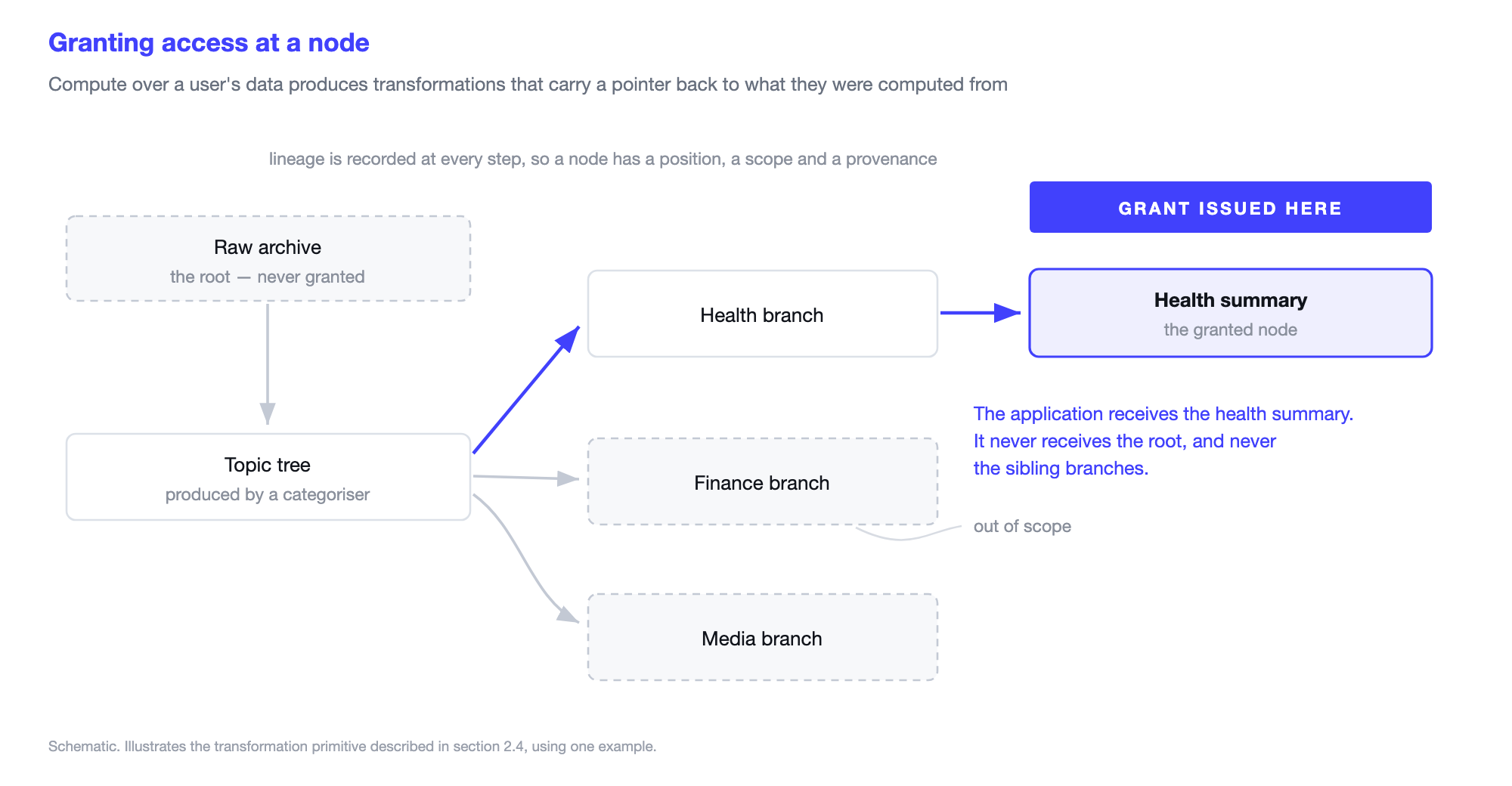
Figure 3. A grant issued at one node of a transformation tree. The root and the sibling branches remain out of scope.
Transformations add further transaction types: a context query, redacting patient information, and any other operation run on top of the data.
Deletion is exercised by the user, at a single node or across a full lineage. A transformation survives deletion of its sources, so the records an application reads against persist independently of the raw data they came from.
Transformations also give the protocol a way to price by payload. Telling one payload from another requires the protocol to know what a payload is, and a transformation node has a recorded position, lineage and scope.
A transformation can be computed once or recomputed as its sources grow. The second case is a single grant that generates priced reads for as long as the underlying data changes.
2.5 The unit
An application needs continuing access to a person's data — a listening history, a fitness record, a purchase log — on terms that person set. The owner grants a scope. The application reads against that scope when it needs the data. Each read is priced at a fixed, adjustable rate, settled via the protocol.
One application reading one scope once a day is 365 priced reads in a year, from a single act of contribution. The contribution happens once; the fees do not.
2.6 How a fee splits
The larger share of every fee is allocated to the parties who secure and operate the network, which is what ties the network's security to how much it is used. A further share buys VANA on the market and burns it. The Foundation holds the remainder for ecosystem funding.
These are parameters rather than fixed properties. Both splits and the commission can be changed without redeploying a contract. Section 6 lists them.
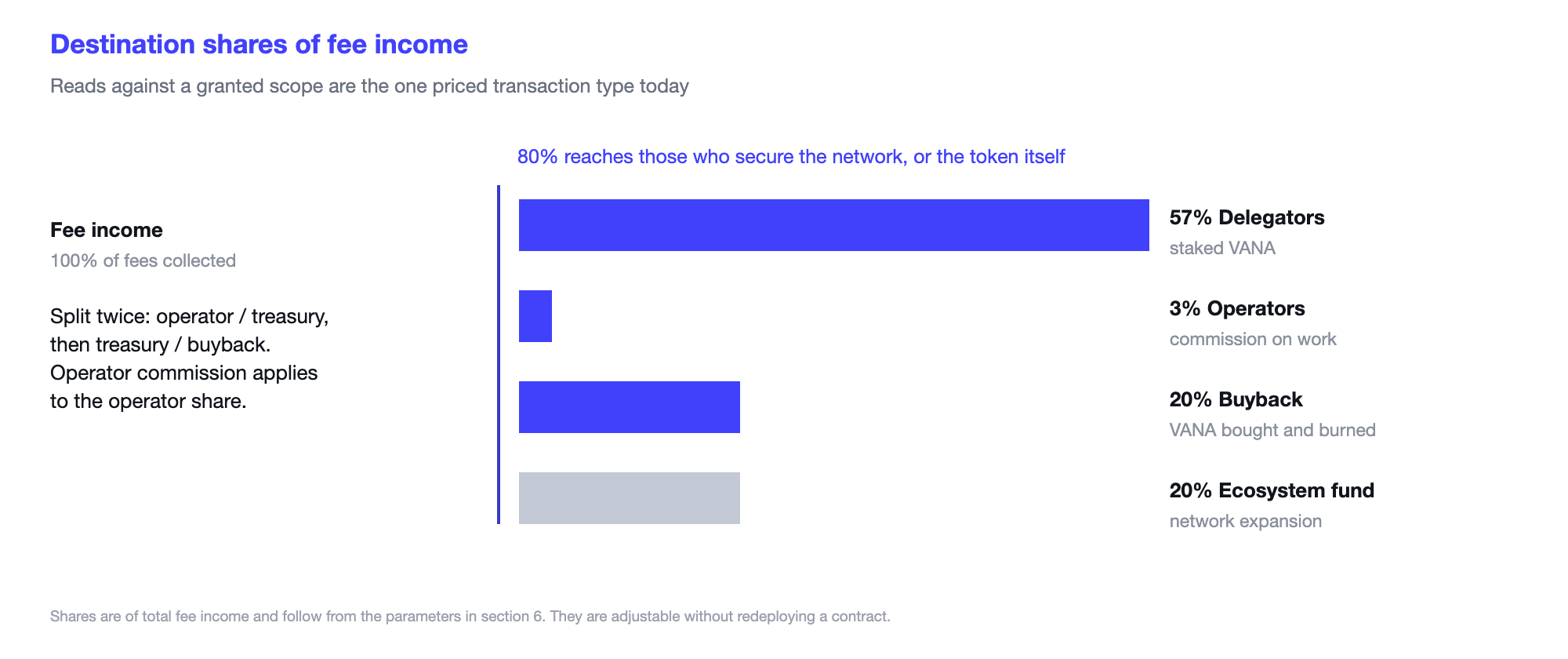
Figure 4. Destination shares of fee income. Reads are the one priced transaction type today.
2.7 Fees become demand for VANA
Fees are paid into the network by its users, currently in USDC. The staking and buyback shares are both used to buy VANA on the market. The staking share is distributed and the buyback share burned, so income the network earns from outside it becomes demand for the asset rather than an internal transfer.
Staking is intended to tie the network's security to the value staked in it.
2.8 How the parts feed each other
| Loop | Mechanism | Result |
|---|---|---|
| Usage → allocation → staking | More reads means more fees per unit of staked VANA | More VANA staked |
| Fees → burn → supply | Burn scales with fees; issuance does not | Beyond a level of use, net supply falls |
| Ecosystem → applications → usage | Foundation capital funds builders, whose applications generate reads | More of the input everything else draws on |
| Operator income → operators | Fee income makes running an operator viable without subsidy | More operators |
Live read volume, fee income and burn are published at token.vana.org.
3. Staking
3.1 What is allocated
The larger share of fee income is allocated to the parties securing the network. The Foundation holds the remainder, and uses a defined share of it to buy VANA on the market.
Staking on Vana is delegation to a named operator, not a deposit into a single pool. That is what determines how the allocation behaves.
3.2 How delegation works
The protocol allocates fee income across operator pools in proportion to the VANA staked with each. The operator does the work, sets its commission, and passes on the rest pro rata. A delegator picks an operator on published terms.
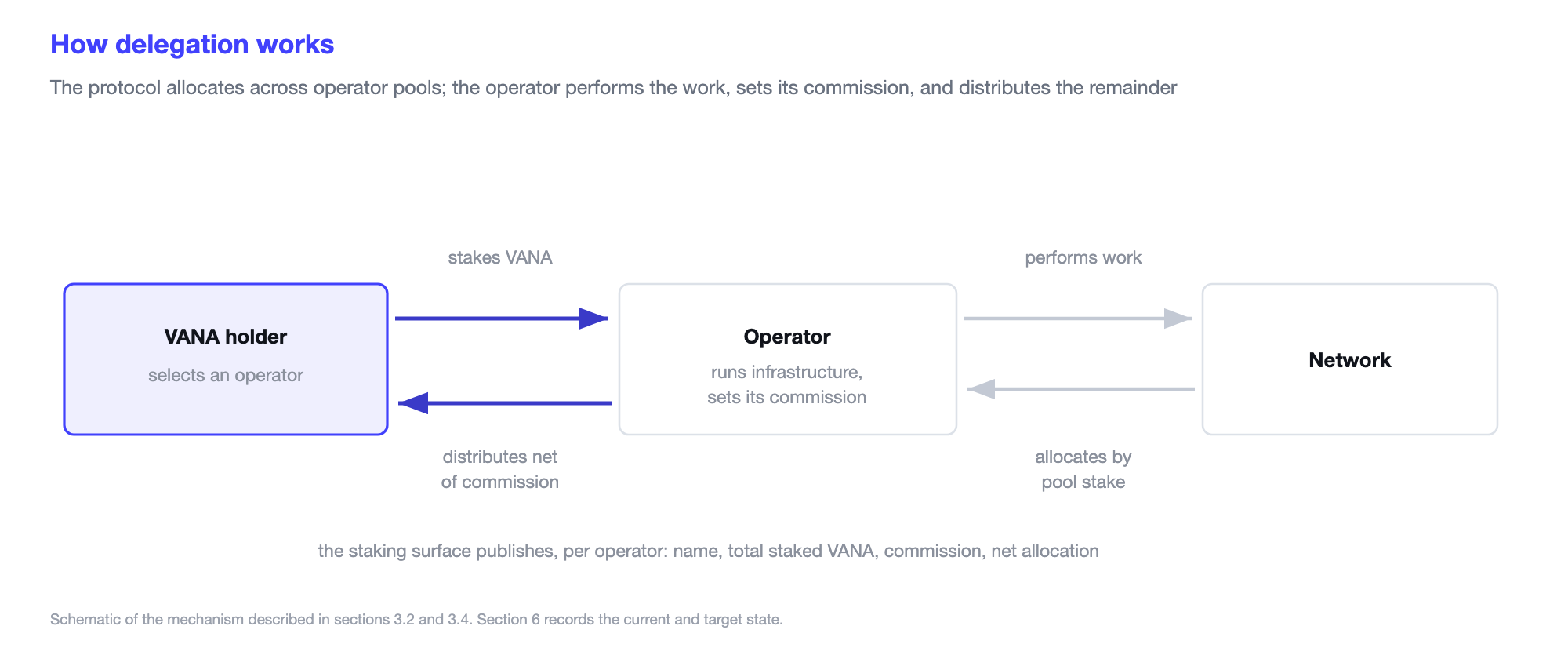
Figure 5. The protocol allocates across operator pools; the operator performs the work, sets its commission, and distributes the remainder.
3.3 What determines what a delegator earns
| Input | Effect | Set by |
|---|---|---|
| Fee income | Rises with reads | Network usage |
| Operator share | Fixed | Protocol configuration |
| Delegator's share of staked VANA | Rises with the operator's standing | Delegators |
| Operator commission | Reduces what is passed on | The operator |
| Total staked VANA | Divides the same income further | Everyone staking |
More reads raise the numerator. More VANA staked divides the same income across a larger base.
3.4 How an operator's share is worked out
Each operator is allocated a share of fee income in proportion to the VANA staked with it, and passes that on to its delegators after taking its commission.
The intended end state ties an operator's share to the work it actually does, with staked VANA determining how much work it is given. That runs through stake-weighted allocation of work at the consensus layer, which is a planned upgrade. The operator's role does not change: it does the work, sets its commission, and makes the distribution.
3.5 Yield
Yield follows from four things:
yield = fee income × operator share × (1 − commission)
÷ (VANA staked × price of VANA)
Fee income — what the network collects from paid reads over the period.
Operator share — the 60% allocated to operator pools.
Commission — what the operator keeps, 5% by default.
VANA staked × price — the value of the capital the income is divided across.
Worked through. Suppose the network collects $1,000,000 in fees over a year. 60% goes to operator pools — $600,000. Operators keep 5% of that, so $570,000 reaches stakers.
If 1,000,000 VANA is staked and VANA trades at $1.00, that capital is worth $1,000,000. So stakers earn $570,000 on $1,000,000 staked — a yield of 57%.
Now change one input at a time. Double the fees to $2,000,000 and the yield doubles to 114%. Double the staked VANA to 2,000,000 instead and it halves to 28.5%. Double the price and it halves again, because the same income is divided across capital worth twice as much.
Fee income depends on how much the network is used, and the staked base and price are set by the market.
3.6 Bonding
A bonding period applies before staked VANA earns. Restaking recalculates on a weighted average, and rewards compound through automatic restake.
The intended end state puts delegated VANA at risk alongside the operator's own stake. That is a planned upgrade; section 6 records where it stands.
3.7 Choosing an operator
The staking surface publishes, per operator: name, total staked VANA, commission, and what a delegator receives after it. Current pools and their terms are at stake.vana.org.
4. Buyback
A defined share of fee income is used to buy VANA on the market, and what is bought is burned.
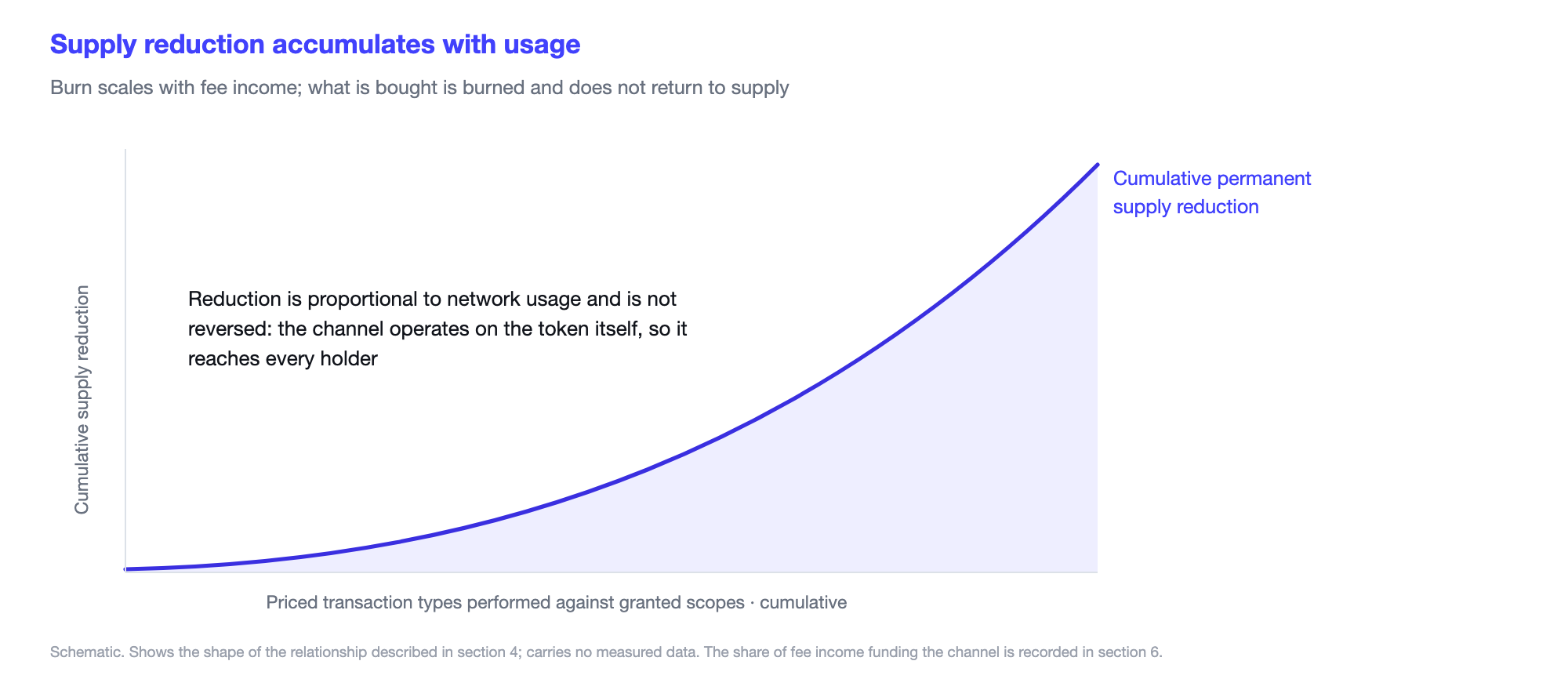
Figure 6. Burn scales with fee income; what is bought is burned and does not return to supply.
The share is a parameter, not a discretionary decision each cycle, and it is adjustable. It scales with reads and with nothing else. Section 6 records its current value. Each buyback and burn is published with its transaction hash at token.vana.org/burn.
5. Supply
5.1 The cap
VANA is issued against a policy cap of 120,000,000 tokens.
Issuance is validator reward under standard proof-of-stake: a function of how much is staked and how well validators participate. It does not reference network usage or fees. Nothing an application does causes VANA to be issued. Issuance runs at approximately 440,700 VANA per year. Current supply and issuance are published at token.vana.org.
5.2 Issuance against burn
Two things act on supply, on unrelated drivers. Issuance is validator reward and is indifferent to network activity. Burn scales with fee income.
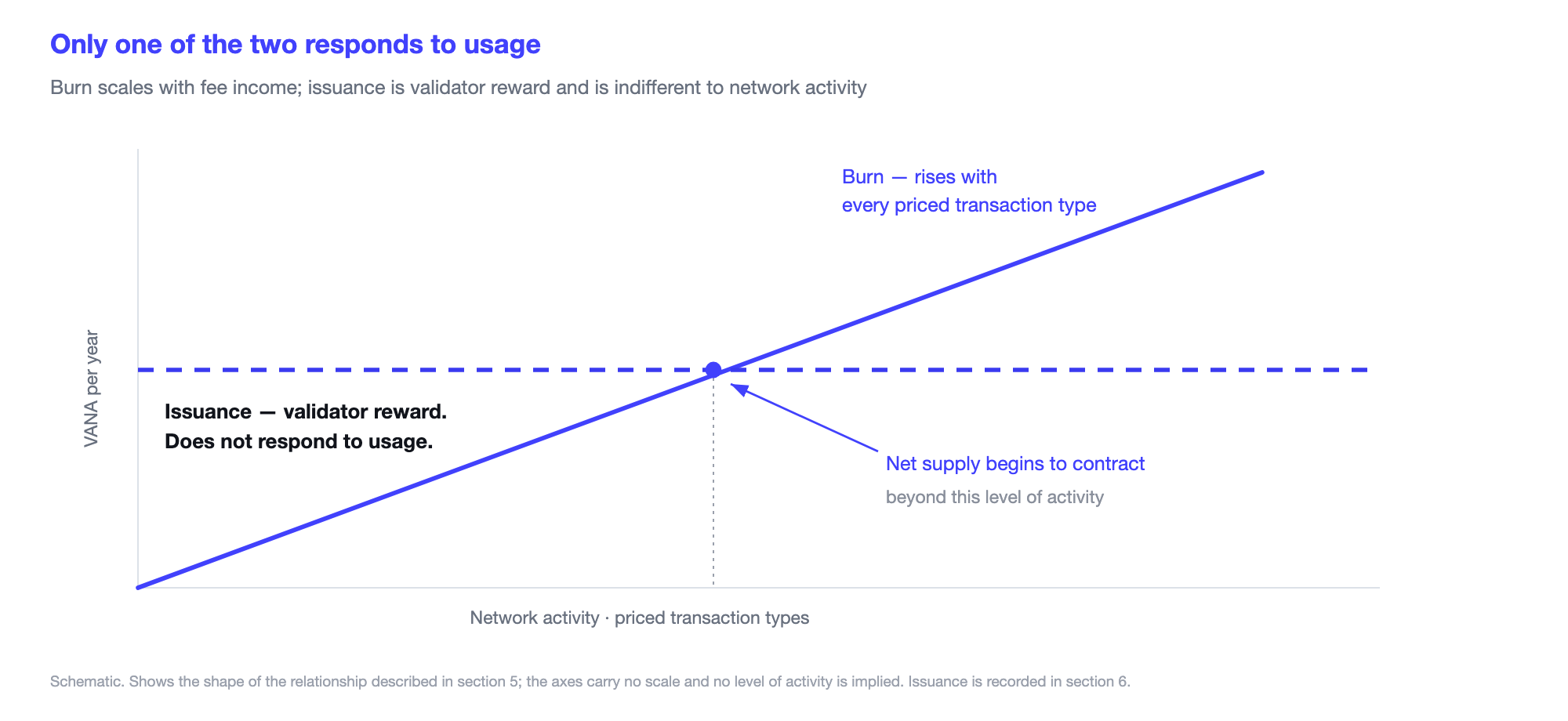
Figure 7. Issuance is flat against network activity; burn rises with fee income. The crossing point is where net supply begins to contract.
Only one of the two responds to use. Beyond some level of activity, burn exceeds issuance and net supply contracts. Reaching that point takes no vote, no intervention and no parameter change; it is a function of how much the network is used.
6. Parameters
Values as at 22 September 2026, Vana mainnet (chainId 1480). Live values are at token.vana.org. Adjustable means the parameter can be changed without redeploying a contract.
Fees
| Transaction type | Current | Status |
|---|---|---|
| Read against a granted scope | $0.01 per scope-read | Adjustable |
| Permission grant | Zero | Adjustable |
| Data write | Not set | Adjustable |
| Personal server registration | Not set | Adjustable |
| Rate by payload | One rate per transaction type | Target state |
| Context query | Not set | Target state |
| Transformation request | Not set | Target state |
| Transformation registration | Not set | Target state |
| Transformation grant | Not set | Target state |
| Node-addressed read | Not set | Target state |
| Lineage query | Not set | Target state |
| Deletion | Not set | Target state |
| Settlement | External stable currency; gas in VANA | Adjustable |
Allocation
| Parameter | Current | Adjustable |
|---|---|---|
| Operator / treasury share | 60 / 40 | Yes |
| Treasury / buyback share | 50 / 50 | Yes |
| Operator commission | Operator-settable, 5% default | Yes |
Staking
| Parameter | Current | Target state |
|---|---|---|
| Allocation basis | Pro rata to staked VANA | Work-proportional |
| Work allocation | Uniform across the validator set | Stake-weighted |
| Slashing | Operator stake | Operator stake and delegated VANA |
| Validator activation | 35,000 VANA | Network upgrade |
| Validator set | 31 permissioned validators, 1,085,000 VANA credited | — |
| Delegator minimum | None | — |
| Bonding period | 5 days | Adjustable |
| Yield | Market-determined | Unchanged |
Buyback
| Parameter | Current | Adjustable |
|---|---|---|
| Funding | Defined share of fee income | Yes |
Every current value marked adjustable can be changed by a maintainer role without redeploying a contract; the target states are protocol upgrades rather than parameter changes. That is what makes each adjustable parameter a candidate for holder governance in future.
Issuance
| Parameter | Value |
|---|---|
| Issuance | ~440,700 VANA/yr |
| Responds to fees | No — validator reward only |
| Supply cap | 120,000,000 VANA — policy commitment |